

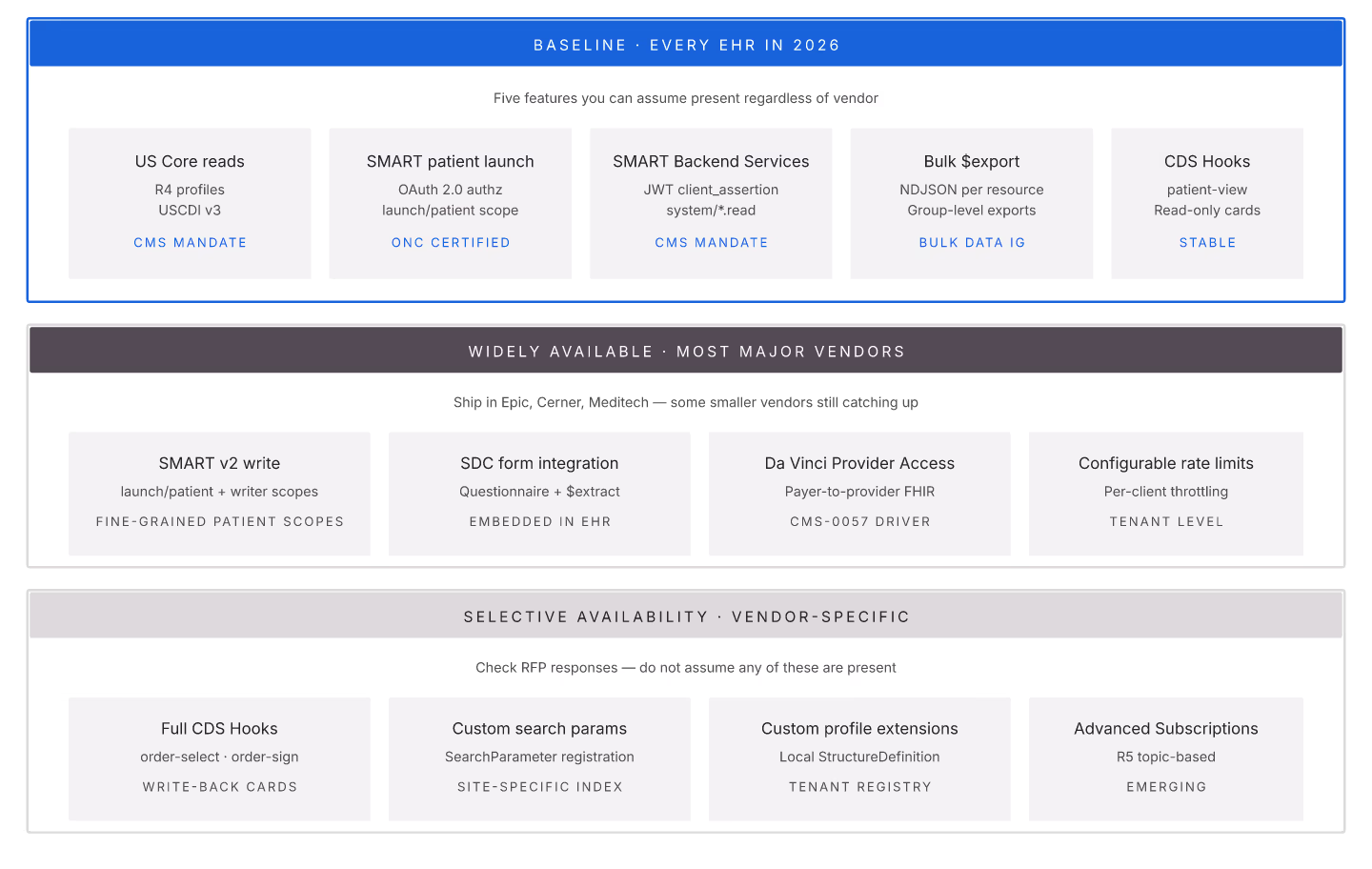
EHR FHIR APIs have consolidated around a common feature baseline in 2026. Buyers evaluating EHRs should expect these features; missing any is a red flag.
Baseline (must-have in 2026)
1. **US Core-conformant reads.** Patient, Encounter, Observation, Condition, MedicationRequest, Practitioner, and secondary US Core resources.
2. **SMART on FHIR patient launch.** Third-party app integration standard.
3. SMART Backend Services. System-to-system integrations.
4. **Bulk Data IG $export.** Nightly bulk data for analytics.
5. **CDS Hooks patient-view.** Point-of-care decision support.
Widely available
1. Write access via SMART v2 scopes. 2. SDC-based form integration. 3. Da Vinci Provider Access API. 4. Configurable rate limits per app.
Selective availability
1. Full CDS Hooks (order-select, order-sign). 2. Custom search parameters. 3. Custom profile extensions. 4. Advanced Subscription semantics.
Vendor baseline scorecard
| EHR | US Core reads | SMART launch | Bulk export | CDS Hooks | Write |
|---|---|---|---|---|---|
| Epic | Full | Full | Full | Full | Configurable |
| Cerner Powerchart | Full | Full | Full | Full | Configurable |
| Athenaclinicals | Full | Full | Full | Partial | Custom |
| Meditech | Growing | Full | Partial | Partial | Custom |
Rate limits (typical)
| Scope | Range |
|---|---|
| patient/* | 30-100 req/min |
| user/* | 60-200 req/min |
| system/* | 500-5000 req/min |
| Bulk export | 1-3 concurrent |
Purchasing red flags
1. Missing US Core conformance (verify with Inferno). 2. Custom auth instead of SMART. 3. No bulk export. 4. Aggressive rate limits without justification. 5. Custom profile requirements for third-party apps.
EHR FHIR APIs in 2026 have a well-understood baseline. Buyers should hold vendors to it.