

Terminology servers seem like infrastructure most teams could skip. In practice they deliver measurable value that shapes data quality significantly.
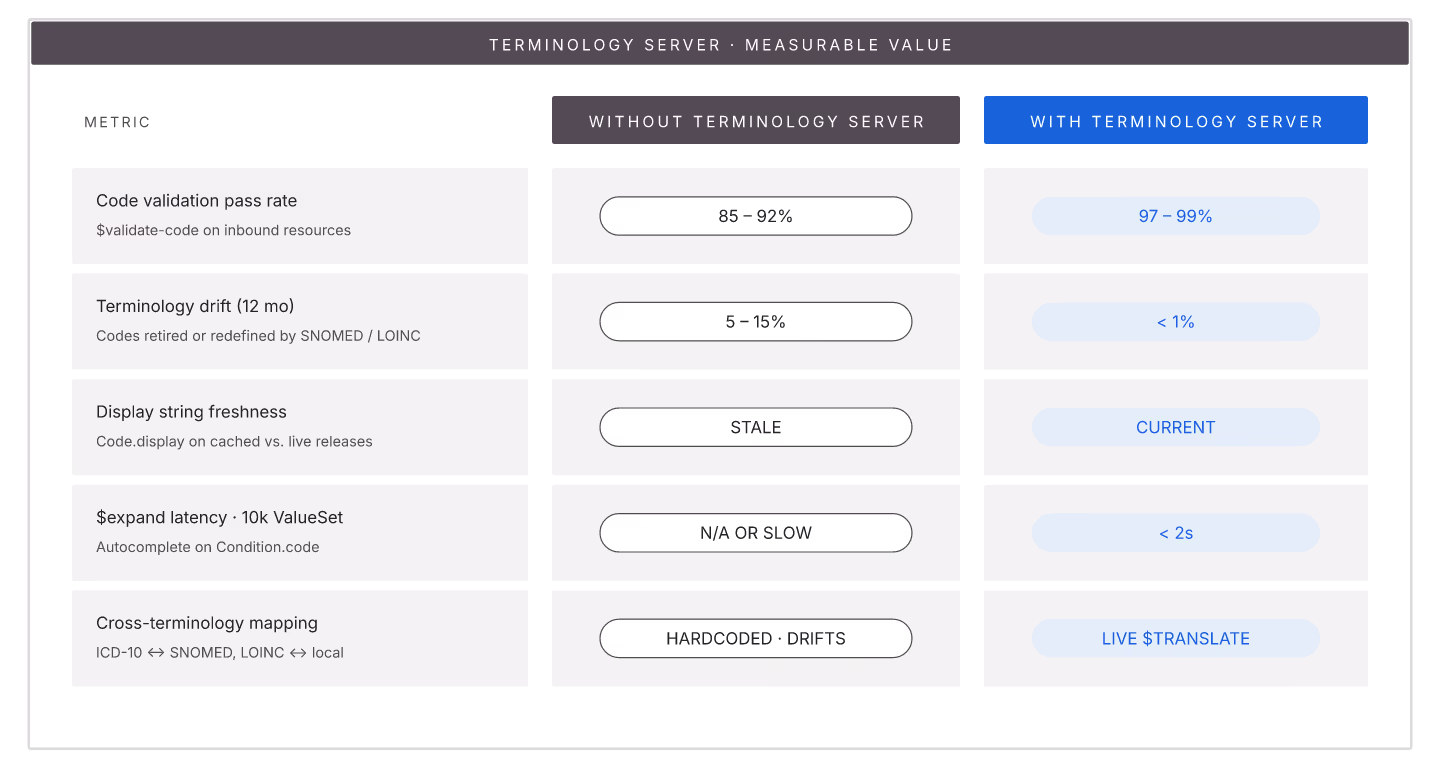
Value 1: $validate-code on write. Every coded field validated at write time. Prevents bad codes from landing in the FHIR store. Sites without this see 5-15% terminology drift within 12 months.
Value 2: $expand for choice-list population. SDC forms populate dropdown choices via ValueSet expansion. Runtime $expand on 10k+ concept ValueSets requires terminology server.
Value 3: $translate for cross-terminology mapping. ICD-10 to SNOMED, LOINC-to-SNOMED, RxNorm-to-NDC. Application code that embeds mappings drifts; terminology-server-driven $translate stays current.
Value 4: $lookup for display resolution. Codes have display strings that update; terminology server provides current display. Prevents stale strings in application UI.
Value 5: Cross-system terminology consistency. Multiple FHIR servers share one terminology server; all bindings consistent.
Measurable data quality impact
| Metric | Without terminology server | With |
|---|---|---|
| Code validation pass rate | 85-92% | 97-99% |
| Terminology drift over 12 months | 5-15% | <1% |
| Cross-system consistency | Low | High |
| Downstream reporting accuracy | Poor | Good |
Deployment options
1. In-process with FHIR server. HAPI's terminology module, Aidbox terminology. Simpler ops. 2. Standalone. Ontoserver. More capable, more infra. 3. Managed cloud. Fewer options; typically fewer features.
Cost justification
Sites without terminology servers spend the equivalent budget on downstream data cleanup, analytics correction, and compliance remediation. Net cost is often higher without than with.
Terminology servers deliver quiet value. Investment upfront pays back through avoided debt for years.