

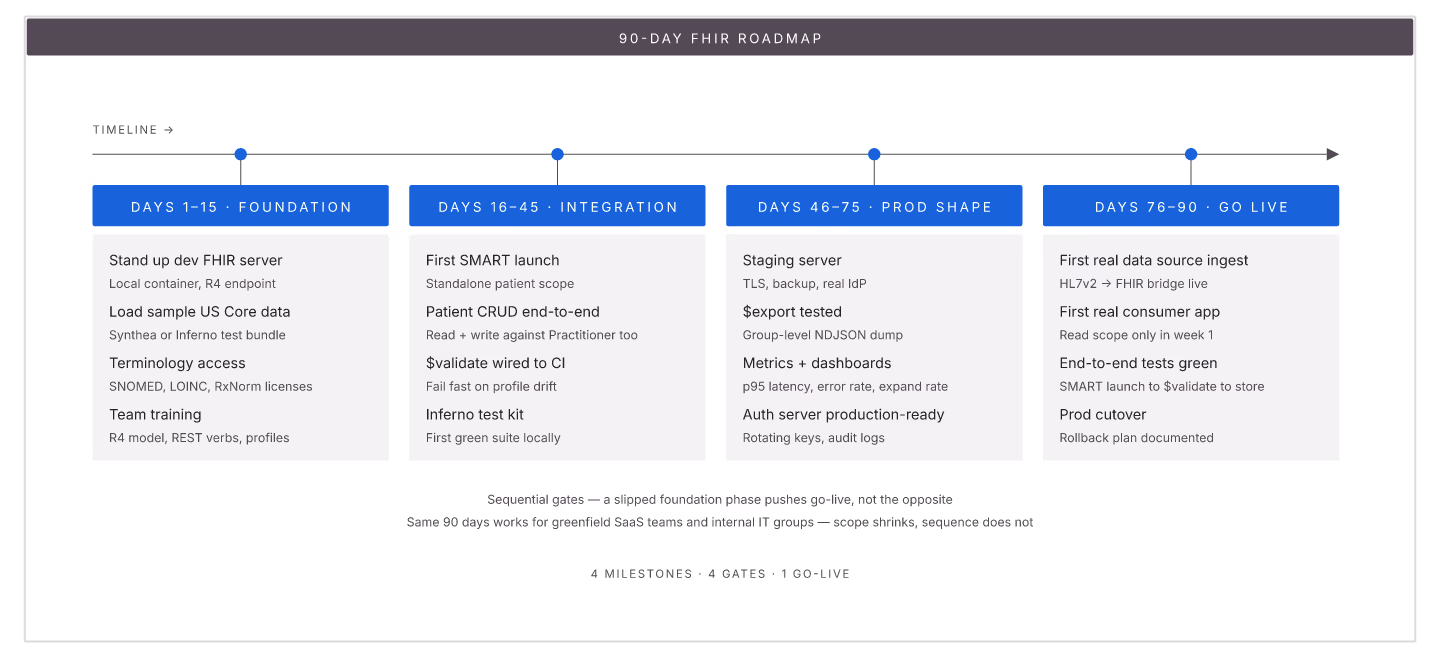
FHIR implementation for teams starting from zero involves specific 90-day milestones. Following the sequence below prevents scope explosion and ships something usable by day 90.
Days 1-15: Foundation
1. Deploy dev FHIR server (HAPI, Aidbox, or Medplum) locally. 2. Load sample US Core-conformant Patient, Observation, Encounter resources. 3. Set up terminology server access (Ontoserver dev, or in-process). 4. Team FHIR training (spec walkthrough + selected server tutorials).
Days 16-45: Basic integration
1. First SMART launch (patient standalone) working against dev server. 2. Basic Patient read/write endpoints working. 3. $validate wired into write path. 4. Inferno test setup for US Core.
Days 46-75: Production-shape features
1. Deploy staging FHIR server (production-like config). 2. Bulk export capability ($export operation). 3. Prometheus metrics + dashboards. 4. Auth server (Keycloak, Auth0, or built-in).
Days 76-90: Real integration
1. First real data source ingesting (HL7v2 converter or direct FHIR). 2. First real consumer (SMART app or bulk pipeline). 3. End-to-end conformance test passing. 4. Runbook for operations.
Timeline risks
| Risk | Impact |
|---|---|
| No dedicated team | +3-6 months |
| No FHIR expertise on team | +3 months |
| Legacy data migration in scope | +6-12 months |
| Custom auth requirement | +3 months |
What NOT to try in first 90 days
1. CMS-0057 conformance (defer to months 4-9). 2. Multi-EHR integration (start with one). 3. Da Vinci profiles (US Core first). 4. Bulk data optimization (baseline first). 5. Complex SDC forms.
Success signals at day 90
1. FHIR server in staging with real data. 2. First integration end-to-end working. 3. Inferno tests passing. 4. Team fluent in FHIR concepts. 5. Runbook exists.
The 90-day roadmap works for teams starting with focused execution and clear scope. Extend timelines proportionally for team ramp-up needs.